
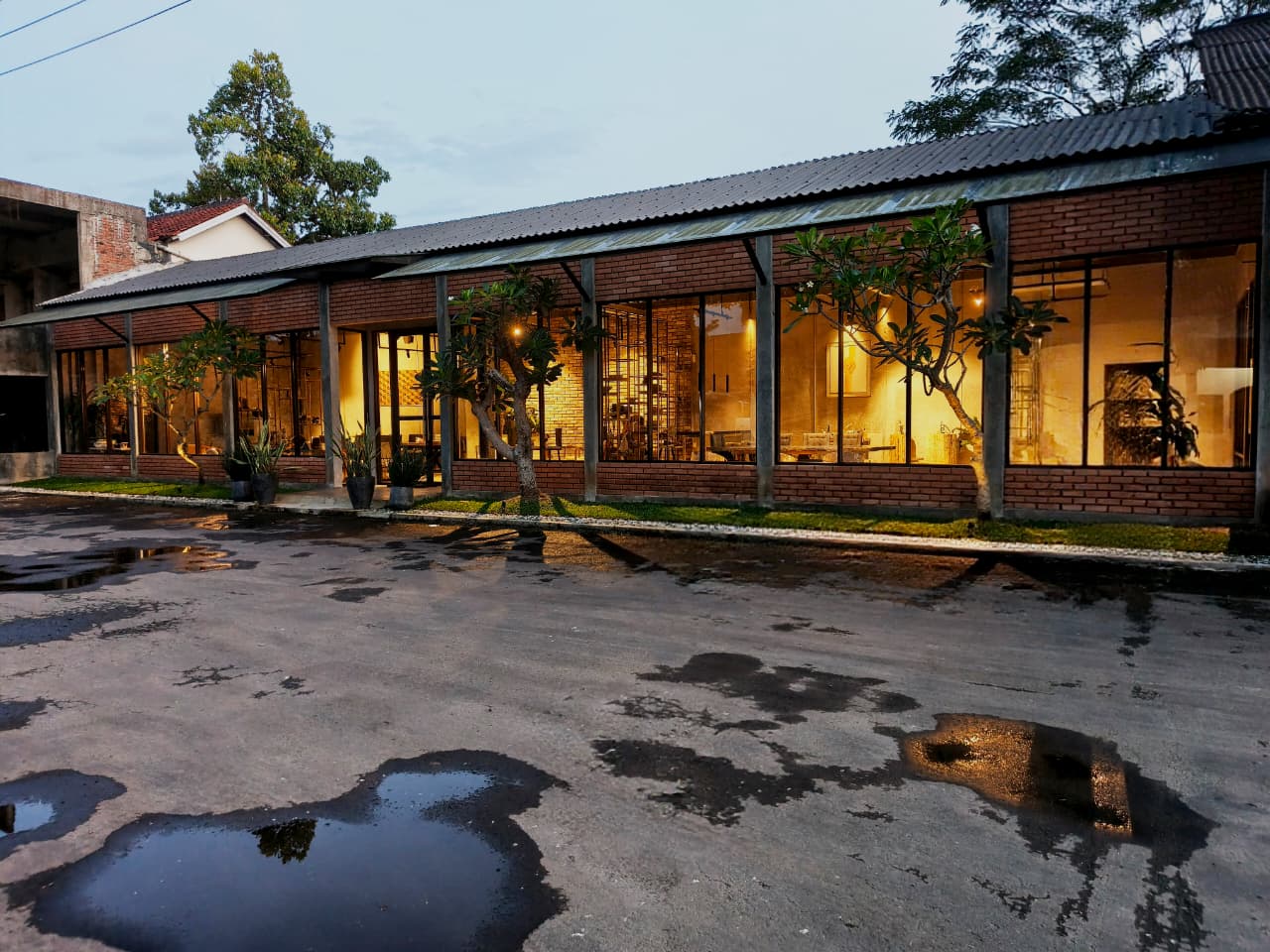
Petrified Wood Dining Tables
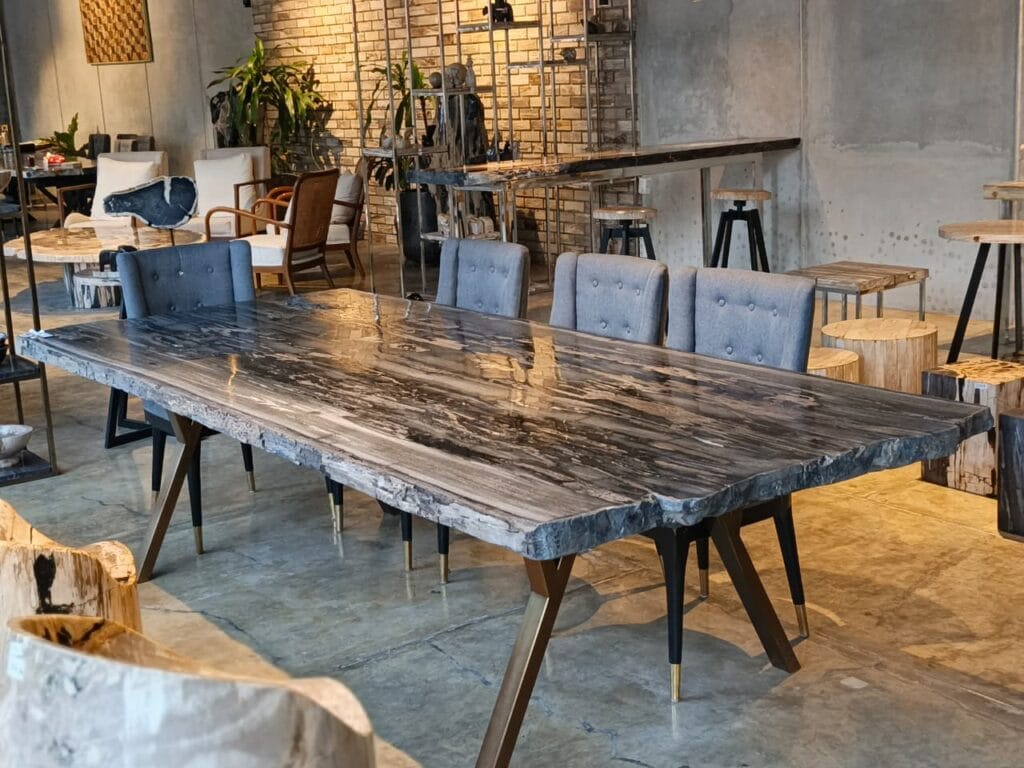
Large Format Wholesale Supply from Indonesia
A petrified wood dining table is not timber. It is fossilized wood transformed into stone through mineral replacement over millions of years.
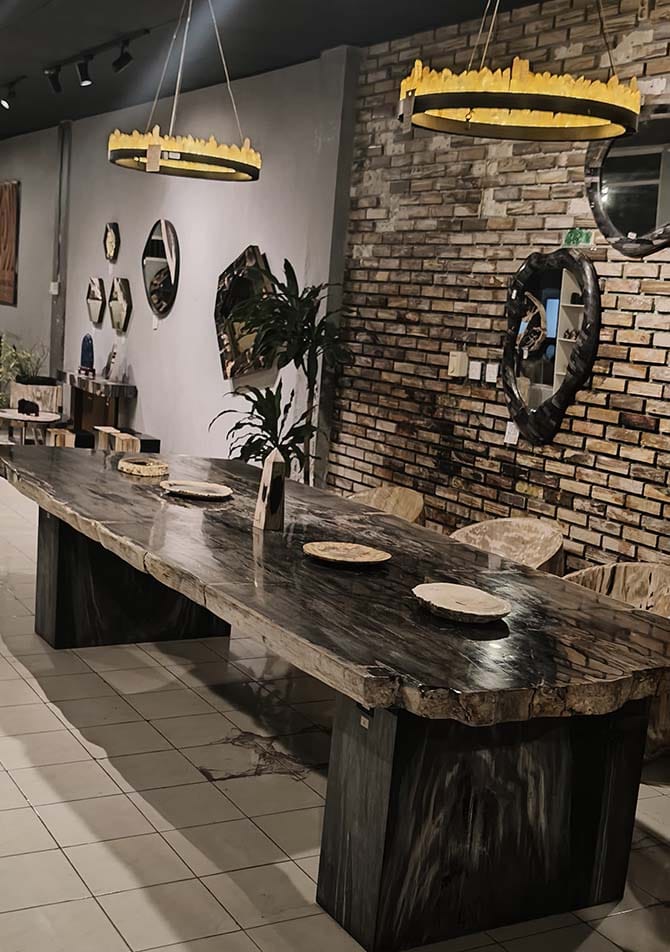
Manufactured at industrial scale in Bogor, West Java, our petrified wood dining tables are engineered for hospitality installations, architectural projects, and container-based wholesale distribution.
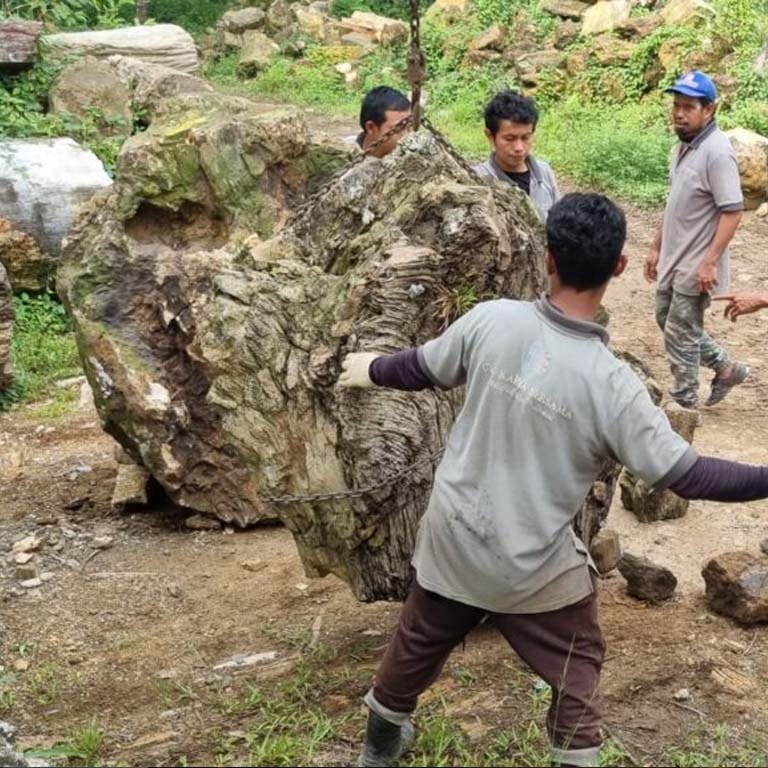
We process fossil logs up to approximately 5 meters using water-cooled diamond saw systems and produce large-format dining slabs exceeding 800 kilograms.
This is not decorative furniture.
This is structural fossil stone designed for long-term installation.
The Geological Origin of a Petrified Wood Dining Table
When ancient trees were buried beneath volcanic ash and sediment, groundwater rich in silica gradually replaced organic cell structures with quartz and other minerals. Over time, the wood transformed into stone while preserving its original cellular detail.
As a result, every petrified wood dining table slab retains visible growth rings, mineral veins, and fossil grain patterns that cannot be replicated artificially.
Color variation depends on mineral presence:
• Iron creates red, orange, and yellow tones
• Carbon contributes darker shades
• Manganese may introduce pink or purple variation
• Copper can produce green or blue undertones
This geological transformation gives each petrified wood dining table structural density comparable to natural stone, while preserving the organic character of ancient timber.
Petrified Wood Dining Table vs Solid Timber vs Marble
When selecting a statement dining surface for hospitality or architectural environments, material performance matters as much as appearance.
Petrified Wood Dining Table
- Fossilized natural wood transformed into quartz stone
- Preserves tree rings and organic grain patterns
- Density comparable to natural stone
- Unique mineral coloration, no two slabs identical
- Structurally heavy and stable
- Requires professional installation due to weight
Solid Timber Dining Table
- Organic wood composition
- Expands and contracts with humidity
- Surface susceptible to dents and scratches
- Requires regular maintenance sealing
- Lighter structural weight
Marble Dining Table
- Uniform mineral stone
- Predictable veining patterns
- Brittle under impact stress
- Porous without proper sealing
- Heavy but lacks fossil grain character
A petrified wood dining table combines the organic visual complexity of timber with the structural density of stone. Unlike timber, it does not warp. Unlike marble, it preserves cellular wood detail within mineral structure.
This hybrid geological identity makes it suitable for environments requiring both durability and architectural uniqueness.
Large-Format Capability for Hospitality Projects
Oversized petrified wood dining tables demand structural planning, machine capacity, and weight management beyond standard workshop limitations.
Our recent production and current inventory include slabs within the following range:
Length: 183 cm to 450 cm
Width: 55 cm to 142 cm
Thickness: 4 cm to 10 cm
Weight: 108 kg to 840 kg per slab
Selected large-format examples:
- 377 × 128 × 7 cm – 705 kg
- 410 × 100 × 6 cm – 600 kg
- 378 × 102 × 7.5 cm – 510 kg
- 316 × 85 × 10 cm – 460 kg
- 321 × 71 × 21 cm – 840 kg
- 450 × 81 × 4 cm – extra-long format
Standard production slabs typically reach up to 3 meters in length. Rare, oversized slabs approaching 4.5 meters are available selectively. The longest non-joined slab exported has approached 5 meters.
These dimensions place our petrified wood dining tables within architectural stone class rather than conventional furniture category.
For resort dining halls, luxury villas, and commercial hospitality installations, structural evaluation is conducted prior to finishing. Where required, internal steel reinforcement may be integrated to ensure long-span stability.
Industrial Cutting & Structural Engineering
Our facility operates 7 cutting machines equipped with diamond blades ranging from 600 mm to 2200 mm in diameter.
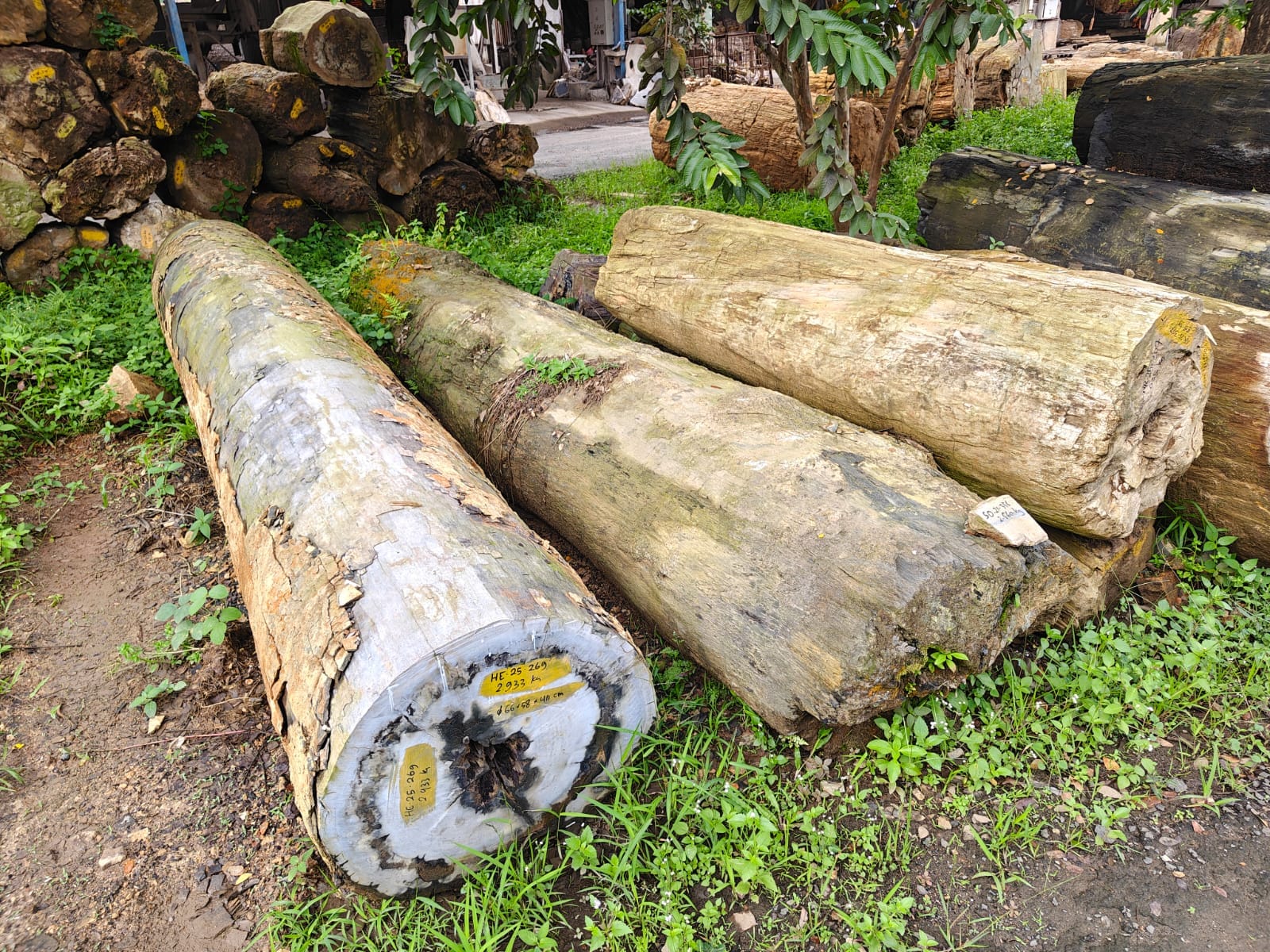
Fossil logs up to approximately 5 meters are processed in our dedicated large-format cutting hall before transfer to stabilization and polishing zones.
Each petrified wood dining table follows a controlled workflow:
- Raw slab selection based on density and fracture assessment
- Precision cutting using water cooled diamond systems
- Structural span evaluation
- Resin stabilization where required
- Mechanical and manual polishing up to 3000-grit
- Dimensional inspection
- Custom crating for export
Base configuration is flexible:
- Slab only
- Custom metal base
- Wood base
- Predrilled installation points
Edge finishing options include:
- Fully polished edge
- Natural live edge
- Hybrid polished-natural finish
This flexibility allows adaptation to both hospitality-scale installations and distributor-oriented wholesale supply.
Inventory Depth & Classification
Dining table inventory is dynamic and continuously updated according to production cycles and export scheduling.
| Common Range | Rare Range | Signature Range |
| Stable 2m–3m petrified wood dining table slabs suitable for recurring container-based wholesale programs. | Distinct fossil patterns, darker mineral tones, or uncommon grain structures produced in limited cycles. | Oversized 3m–4.5m slabs exceeding 600 kg, reserved for architectural statement installations and hospitality-scale projects. |
Because slab movement depends on container allocation and project commitments, full live inventory lists are shared directly with qualified buyers.
This controlled disclosure protects allocation discipline and ensures availability accuracy.
Distributor Scale Production Capacity
While large-format slabs establish architectural dominance, we maintain consistent throughput for distributor-oriented programs.
Typical 2.6m–3.0m petrified wood dining table slabs range between 400 kg and 600 kg and are suitable for container-based recurring supply.
Average slab throughput across all size categories is approximately 150 slabs per week.
This capacity supports:
• Project-based hospitality installations
• Recurring container-scale wholesale distribution
The ability to balance oversized signature pieces with mid-scale recurring formats provides structural production stability rather than sporadic output.
Container Logistics & Export Handling
A petrified wood dining table is a structural stone element. Weight planning and transport preparation are critical components of export reliability.
Container planning includes:
- 20ft container: approximately 8–11 tons
- 40ft container: approximately 15–18 tons
- Mixed SKU consolidation available
Export coordination includes:
- FOB and CIF terms
- Routing via Tanjung Priok, Jakarta
- Pre-shipment inspection upon request
- Insurance coordination when required
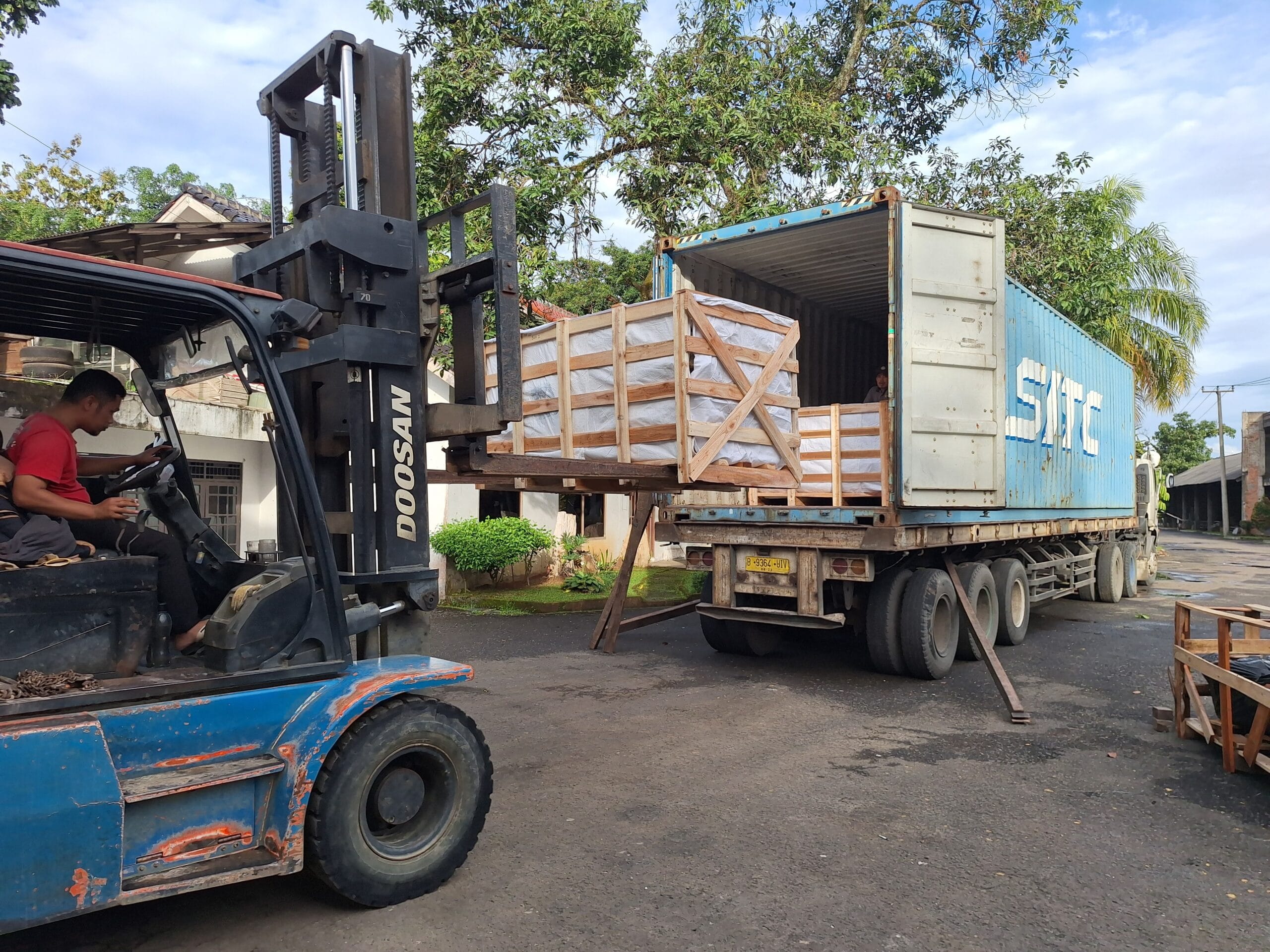
Dining slabs are individually crated with weight-balanced container loading to prevent transit stress.
All container loading procedures are documented via photo and video prior to sealing.
For resort dining halls, luxury villas, and commercial hospitality installations, structural evaluation is conducted prior to finishing. Where required, internal steel reinforcement may be integrated to ensure long-span stability.
Lead time varies according to size and customization level:
Stock slabs: approximately 2–4 weeks
Custom hospitality slabs: approximately, 3–6 weeks
Full container programs: approximately, 1–2 months
Export discipline is integrated into production planning rather than treated as an afterthought.
Frequently Asked Questions
What is the maximum slab size you can process?
Standard production slabs typically reach up to approximately 3 meters. Rare, oversized slabs approaching 4.5 meters are selectively available. The longest non-joined slab exported has approached 5 meters.
Can I order slab only?
Yes. Slab-only, custom base integration, and pre-drilled installation options are available.
Do you reinforce oversized petrified wood dining tables?
Yes. Structural reinforcement is integrated when span or weight distribution requires additional support.
Can multiple dining tables be consolidated in one container?
Yes. Mixed container consolidation is standard practice for distributor clients.
Do you provide inspection documentation?
Yes. Photo and video documentation is provided prior to shipment. Third-party inspection is permitted upon request.
Engineering Considerations for Large Petrified Wood Dining Tables
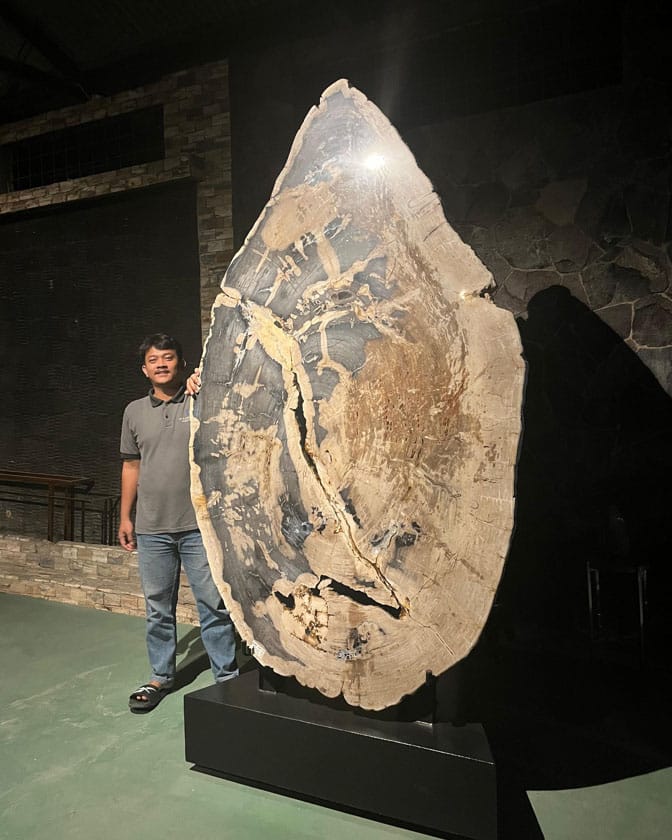
Large-format petrified wood slabs behave differently from timber or engineered stone. Fossilized wood retains internal grain orientation that influences stress distribution under load.
For slabs between 4–5 cm thickness, structural reinforcement evaluation becomes more critical when span exceeds approximately 250 cm.
Thicker slabs in the 7–10 cm range provide stronger natural load distribution, though total weight may exceed 500 kg.
Load-bearing evaluation combines practical structural experience with dimensional assessment. For extended spans, moderate pre-stress checking ensures balanced weight distribution before finishing.
Where required, internal steel reinforcement is integrated discreetly to stabilize long-span hospitality installations.
Join Construction Strategy for Large Installations
Because petrified wood is fossil stone, the primary structural risk occurs during cutting rather than post-installation.
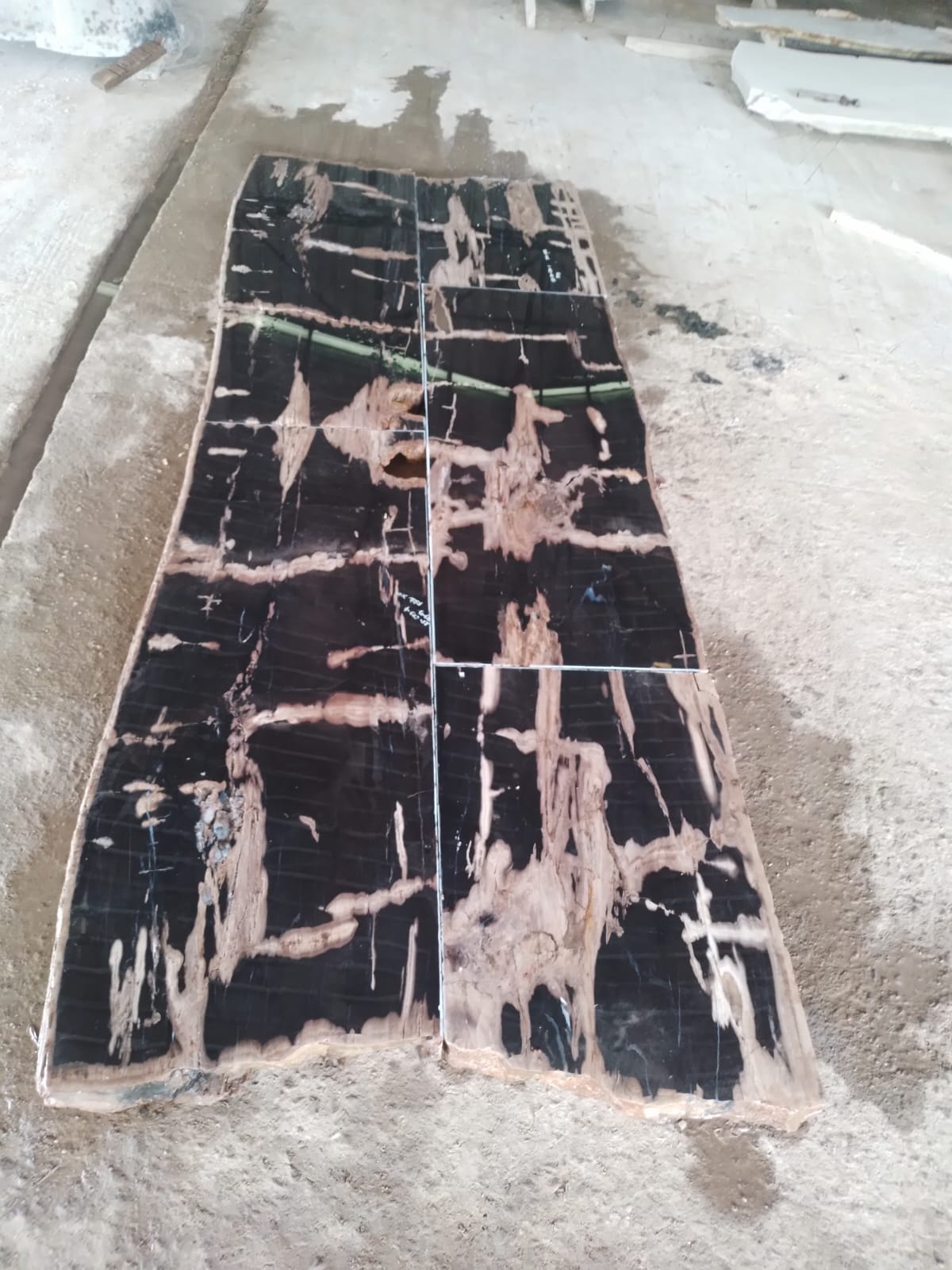
Certain raw logs, when processed toward 3-meter lengths, may reveal fracture lines that compromise single-slab stability.
In such cases, instead of forcing full-length production, we implement engineered join construction using precisely matched slab segments.
This approach:
• Reduces structural failure risk
• Preserves fossil pattern continuity
• Maintains architectural scale
• Improves transport safety
Join construction is not a compromise. It is a structural adaptation to fossil material behavior.
Geological Behavior & Environmental Considerations
Natural-tone petrified wood is highly stable and suitable for diverse environments, including semi-outdoor placements.
Dark-toned fossil slabs require more controlled conditions. Extended moisture exposure or direct sunlight may gradually affect color intensity.
For this reason:
Dark fossil slabs are recommended primarily for indoor hospitality or residential installations.
Natural lighter tones offer greater placement flexibility.
Understanding geological behavior supports long-term performance rather than short-term aesthetics.
Technical Specification Reference
Large Dining Table Capability
Standard slab length: up to approximately 3 meters
Rare slabs: approaching 4.5 meters
Longest slab exported: near 5 meters (non-joined)
Log diameter processed: up to approximately 5 meters
Thickness range: 4–10 cm
Weight range: 108 kg–840 kg
Because CNC machines cannot process extremely large fossil slabs, oversized dining tables are often measured manually using full-scale layout planning prior to cutting.
Surface finishing options:
- High-polish hospitality finish
- Resin-stabilized finish
- Natural-edge preservation
Base integration options:
- Slab only
- Custom metal fabrication
- Wood base
- Pre-drilled installation
Crack Propagation Management
Petrified wood is structurally dense, but internal fracture lines formed during fossilization must be evaluated carefully before cutting.
If structural risk is identified, segmentation strategy is implemented before full-span cutting.
This controlled approach prevents catastrophic breakage during processing and protects rare fossil material from avoidable loss.
Engineering judgment at this stage is critical. Cutting decisions are made based on structural feasibility rather than visual ambition alone.
Prior to primary processing, raw logs undergo visual and structural assessment, including:
- Fracture line identification
- Density variation analysis
- Grain orientation evaluation
- Saw vibration risk assessment
Project Integration for Hospitality Developers
For resort and architectural projects, we support:
• Tone matching across multiple petrified wood dining tables
• Dimensional consistency within project sets
• Surface finish alignment
• Structural reinforcement integration where required
For custom installations exceeding standard dimensions, full-scale layout drawings may be prepared manually before cutting. This is necessary because CNC machinery cannot process extremely large fossil slabs with complete accuracy.
Rare slabs exceeding 4 meters are allocated selectively based on project scope.
Signature slabs above 600 kg are typically reserved for:
• Luxury resorts
• High-end private villas
• Architectural focal installations
Production allocation is managed according to structural feasibility and export scheduling.
Structural Discipline & Long-Term Stability
A petrified wood dining table is not decorative furniture. It is a structural installation element.
Individual slabs may exceed 800 kilograms. Transport, reinforcement, and base integration must be planned prior to shipment.
Internal inspection includes:
• Dimensional verification
• Structural stability review
• Reinforcement integration assessment
• Surface finish confirmation
Improper installation or uneven base support represents the primary risk factor, not inherent material weakness.
When installed with appropriate support, petrified wood maintains structural stability over long-term commercial use.
Material Transparency & Natural Variation
Petrified wood is a fossilized natural material formed over millions of years. Each slab retains mineral deposits, grain orientation, and natural fracture lines created during geological transformation.
Minor surface micro-cracks, mineral inclusions, or tonal variations are inherent characteristics of authentic fossil material. These are not manufacturing defects. They are geological signatures.
Prior to cutting, slabs are graded according to density, crack tolerance, and structural suitability.
Where appropriate, resin stabilization is applied to strengthen structural continuity without compromising natural appearance.
Because fossil material cannot be manufactured artificially, no two petrified wood dining tables are identical. Tone matching and layout coordination are managed during project planning to maintain visual cohesion across installations.
Professional buyers value structural honesty over unrealistic perfection claims.
Care & Maintenance for Hospitality Installations
Although structurally stone, a petrified wood dining table requires informed maintenance to preserve finish and mineral integrity.
Daily Maintenance
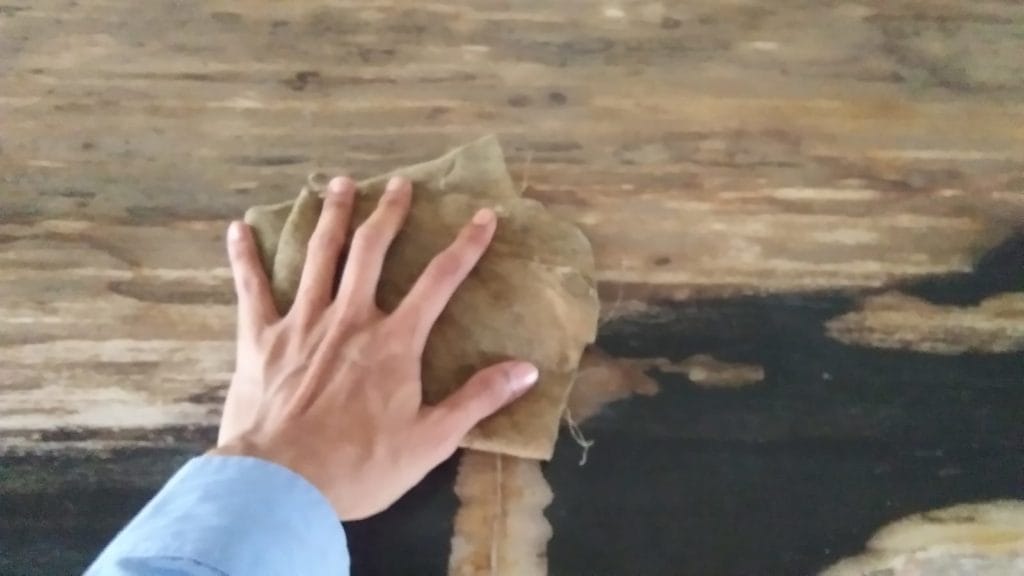
• Clean with soft cloth and neutral pH cleaner
• Avoid acidic or abrasive chemicals
• Avoid prolonged standing water exposure
• Use protective pads beneath heavy metal objects
Natural-tone slabs are stable across varied environments.
Dark-toned slabs should be installed indoors and protected from extended moisture or direct sunlight to preserve color depth.
Surface Protection
Polished surfaces are sealed during finishing.
For high traffic hospitality environments, periodic inspection is recommended.
If resin stabilization is present, surfaces should not be exposed to high heat sources or aggressive chemical cleaners.
Unlike timber, petrified wood does not warp.
Unlike marble, it does not require frequent resealing under normal use conditions.
Structural Handling
Due to slab weight:
• Professional installation is recommended
• Adequate structural base support must be ensured
• Reinforced designs should follow installation guidance
Improper lifting or unsupported span represents the primary failure risk, not material fragility.
Industrial fossil processing requires machine scale, geological understanding, structural judgment, and export discipline.
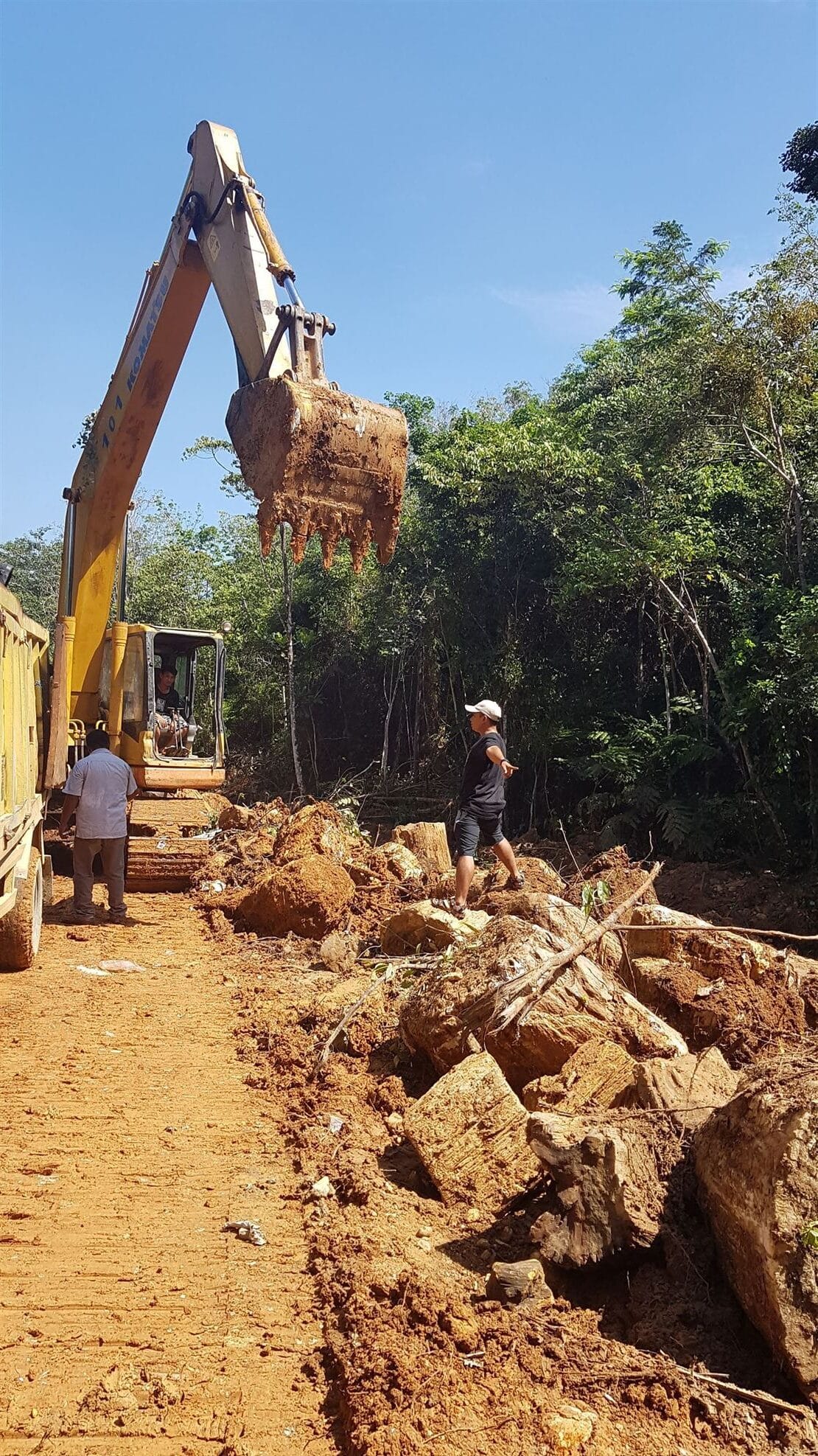
From licensed extraction to precision cutting, reinforcement evaluation, finishing, and container loading, production is controlled within our Bogor manufacturing facility.
Our petrified wood dining tables operate within structural stone manufacturing standards rather than decorative furniture supply models.
For hospitality developers and wholesale distributors seeking long-format fossil installations with documented production capacity, we provide direct factory coordination and export execution.